Which of the Following Rules Created a Dramatic Growth Growth in Arts and Science
Arising out of the rebellious mood at the offset of the twentieth century, modernism was a radical arroyo that yearned to revitalize the way mod civilization viewed life, fine art, politics, and science. This rebellious attitude that flourished betwixt 1900 and 1930 had, as its ground, the rejection of European culture for having become also decadent, complacent and lethargic, ailing because information technology was bound past the artificialities of a gild that was too preoccupied with image and too scared of change. This dissatisfaction with the moral bankruptcy of everything European led modernistic thinkers and artists to explore other alternatives, particularly archaic cultures. For the Establishment, the upshot would exist cataclysmic; the new emerging culture would undermine tradition and say-so in the hopes of transforming gimmicky guild.
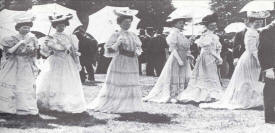
The get-go characteristic associated with modernism is nihilism, the rejection of all religious and moral principles as the only ways of obtaining social progress. In other words, the modernists repudiated the moral codes of the social club in which they were living in. The reason that they did then was not necessarily because they did not believe in God, although there was a great majority of them who were atheists, or that they experienced great doubt most the meaninglessness of life. Rather, their rejection of conventional morality was based on its arbitrariness, its conformity and its exertion of control over human being feelings. In other words, the rules of conduct were a restrictive and limiting forcefulness over the human spirit. The modernists believed that for an individual to feel whole and a contributor to the re-vitalization of the social process, he or she needed to be costless of all the encumbering baggage of hundreds of years of hypocrisy
The rejection of moral and religious principles was compounded by the repudiation of all systems of beliefs, whether in the arts, politics, sciences or philosophy. Doubt was not necessarily the near significant reason why this questioning took place. One of the causes of this iconoclasm was the fact that early 20th-century culture was literally re-inventing itself on a daily ground. With so many scientific discoveries and technological innovations taking place, the globe was changing and then quickly that civilization had to re-define itself constantly in order to go along pace with modernity and not announced anachronistic. By the time a new scientific or philosophical system or artistic style had found acceptance, each was before long after questioned and discarded for an even newer one. Another reason for this fickleness was the fact that people felt a tremendous creative energy always looming in the background as if to announce the nascency of some new invention or theory.
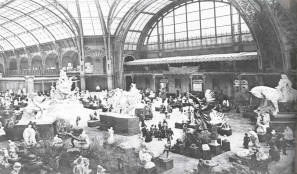
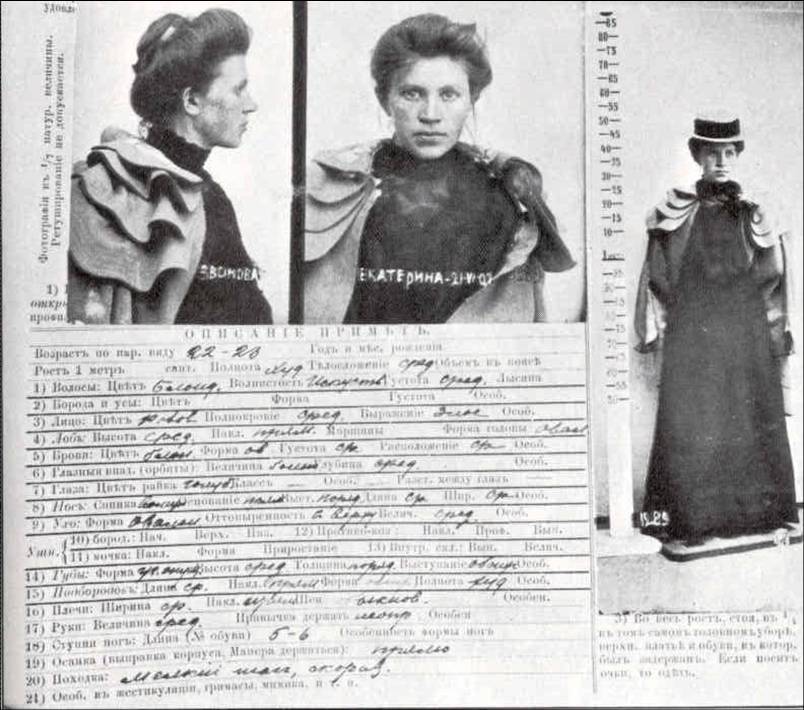
This mimetic tradition had originated way back in ancient Greece, had been perfected during the Renaissance, and had constitute prominence during the nineteenth-century. But for mod artists this sometime standard was likewise limiting and did not reflect the style that life was now being experienced. Freud and Einstein had radically changed perception of reality. Freud had asked us to look inwardly into a personal world that had previously been repressed, and Einstein taught us that relativity was everything. And, thus, new artistic forms had to be found that expressed this new subjectivity. Artists countered with works that were then personal that they distorted the natural appearance of things and with reason. Each individual work begged to be judged as a self-sufficient unit which obeyed its ain internal laws and its own internal logic, thereby attaining its ain individual character. No more than conventional cookie-cutter forms to be superimposed on human expression
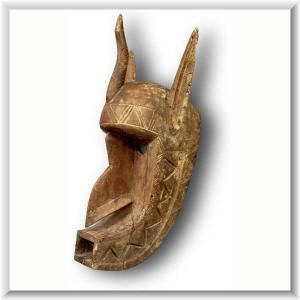
It is that exploration of what is underneath the surface that the modernists were so keen virtually, and what better way to do so than to scrutinize human's real aspirations, feelings, and actions. What was revealed was a new honesty in this portrayal: disintegration, madness, suicide, sexual depravity, impotence, morbidity, deception. Many would assail this portrayal as morally degenerate; the modernists, on the other hand, would defend themselves by calling information technology liberating.
Ironically, the modernist portrayal of human nature takes identify within the context of the urban center rather than in nature, where it had occurred during the entire 19th-century. At the outset of the 19th-century, the romantics had idealized nature as evidence of the transcendent existence of God; towards the terminate of the century, it became a symbol of chaotic, random existence. For the modernists, nature becomes irrelevant and pass�, for the metropolis supersedes nature as the life force. Why would the modernists shift their interest from nature and unto the city? The showtime reason is an obvious one. This is the time when and then many left the countryside to make their fortunes in the city, the new capital of culture and engineering, the new artificial paradise. Simply more importantly, the urban center is the identify where human being is dehumanized by and so many degenerate forces. Thus, the urban center becomes the locus where modernistic man is microscopically focused on and dissected. In the final analysis, the urban center becomes a "roughshod devourer", a cemetery for lost souls.
The year 1900 ushered a new era that changed the style that reality was perceived and portrayed. Years later this revolutionary new period would come up to be known as modernism and would forever be defined equally a time when artists and thinkers rebelled confronting every conceivable doctrine that was widely accepted by the Establishment, whether in the arts, science, medicine, philosophy, etc. Although modernism would be brusk-lived, from 1900 to 1930, we are still reeling from its influences sixty-five years after.
How was modernism such a radical difference from what had preceded it in the by? The modernists were militant about distancing themselves from every traditional idea that had been held sacred past Western culture, and perhaps we can even get so far every bit to refer to them as intellectual anarchists in their willingness to vandalize anything connected to the established gild. In order to better understand this modernist iconoclasm, let's go back in fourth dimension to explore how and why the homo landscape was changing and so rapidly.
By 1900 the world was a bustling place transformed by all of the new discoveries, inventions and technological achievements that were being thrust on civilization: electricity, the combustion engine, the incandescent light seedling, the automobile, the aeroplane, radio, 10-rays, fertilizers and so forth. These innovations revolutionized the world in two singled-out means. For one, they created an optimistic aura of a worldly paradise, of a new technology that was to reshape man into moral perfection. In other words, technology became a new religious cult that held the key to a new utopian dream that would transform the very nature of homo. Secondly, the new technology quickened the pace through which people experienced life on a day to twenty-four hours footing. For instance, the innovations in the field of transportation and communication accelerated the daily life of the private. Whereas in the past, a person'southward life was circumscribed by the lack of mechanical resources bachelor, a person could now expand the scope of daily activities through the new liberating power of the machine. Man now became literally energized by all of these scientific and technological innovations and, more important, felt a rush emanating from the feeling that he was invincible, that there was no stopping him.
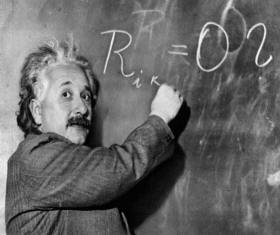
Modernity, however, was not only shaped by this new technology. Several philosophical theoreticians were to alter the mode that modernistic man perceives the external world, particularly in their refutation of the Newtonian principle that reality was an accented, unquestionable entity divorced from those observing it. The get-go to do so was F. H. Bradley, who considered that the man listen is a more primal feature of the universe than affair and that its purpose is to search for truth. His most aggressive work, Appearance and Reality: A Metaphysical Essay (1893), introduced the concept that an object in reality can have no absolute contours but varies from the bending from which it is seen. Thus Bradley defines the identity of a things as the view the onlooker takes of information technology. The outcome of this piece of work was to encourage rather than dispel doubt. In one of the nearly seminal works of this century, "On the Electrodynamics of Moving Bodies," Albert Einstein's theory of relativity held that, if, for all frames of reference, the speed of calorie-free is constant and if all natural laws are the same, then both fourth dimension and motion are plant to be relative to the observer. In other words, there is no such thing as universal fourth dimension and thus experience runs very differently from man to human. Alfred Whitehead was another who revised the ideas of time, space and motion as the ground of homo's perception of the external world. He viewed reality as living geometry and believed in the essential relevance of every object to all other objects: "all entities or factors in the universe are essentially relevant to each other's existence since every entity involves an space array of perspectives." For all of these thinkers, subjectivity was now the master focus.
Several psychological theoreticians were to too fundamentally alter the fashion that modern homo viewed his own internal reality, an unexplored heart of darkness. Sigmund Freud was the first to gaze inwardly and to find a globe within where dynamic, ofttimes warring forces shape the private's psyche and personality. To explain this internal world within each of us, he adult a complex theory of the unconscious that illustrated the importance of unconscious motivation in behavior and the suggestion that psychological events tin can get on outside of witting awareness. And so, according to Freud, fantasies, dreams, and slips of the tongue are outward manifestations of unconscious motives. Furthermore, in explaining the development of personality, Freud expanded man's definition of sexuality to include oral, anal, and other bodily sensations. Thus his legacy to the modern world was to expose a darker side of man that had been hidden from view by the hypocrisy of 19th- century gild.

The French philosopher Henry Bergson was likewise to plow his gaze to the unconscious to explore the nature of memory equally experienced in the present moment. Bergson's Time and the Gratis Will was an endeavour to establish the notion of duration, or lived fourth dimension, as opposed to what he viewed as the spatialized conception of time measured by the clock and usually known as chronological time. Co-ordinate to Bergson, states of witting memory permeate one another in storage within the unconscious, in the same way that "oldie-goldies" are stored in a juke-box. A sense impression, such as whiff of cologne or the taste of sweet potato pie, might trigger consciousness to recall ane of these memories, much like a coin volition cause the record of your choice to play. Once the submerged retention resurfaces in the conscious mind, the cocky becomes suspended, at that place might exist a spontaneous flash of intuition about the by, and just maybe, this insight will translate into some kind of realization of the present moment. In fact, isn't this what we exercise when nosotros listen to an old song, forget the present, re-experience the past, and, then, all suddenly, apply it all to our lives in the present? And thus, intuition leads to knowledge.
Politics and the economic system would also transform the way that modernistic human looked at himself and the world in which he lived. Science and technology were radically changing the means of production. Whereas in the past, a worker became involved in production from beginning to end, past 1900 he had become a mere cog in the production line, making an insignificant contribution. Thus, division of labor made him feel fragmented, alienated not only from the balance of society but from himself. 1 of the effects of this fragmentation was the consolidation of workers into political parties that threatened the upper classes. And, thus, the new political idealism that was to culminate in the Russian Revolution that swept through Europe.
beltonyoureand1971.blogspot.com
Source: https://www.mdc.edu/wolfson/academic/artsletters/art_philosophy/humanities/history_of_modernism.htm
0 Response to "Which of the Following Rules Created a Dramatic Growth Growth in Arts and Science"
Post a Comment